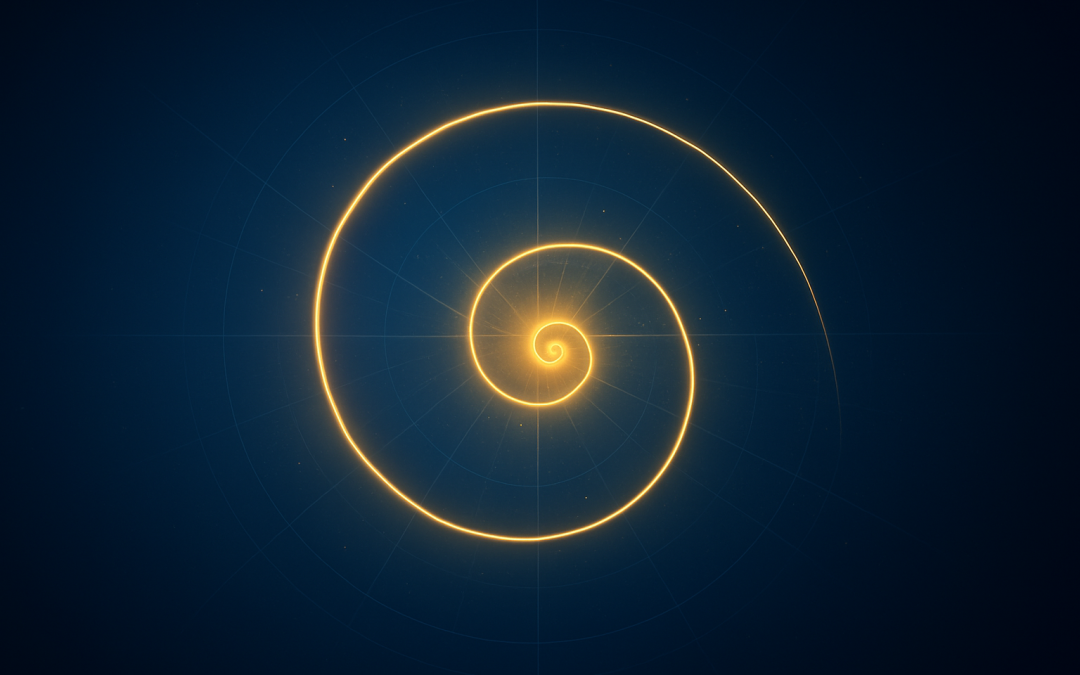
Guidelines

GRG Documentation Guidelines

Describe the construction through its geometric definitions. Use plain language, explicit hypotheses, and reproducible evidence.

Current Formulas

Use geometric lengths and ratios. Keep circular constants outside the construction’s formulas and numerical kernel. Explicit computational comparisons may use reference constants, with their role clearly stated.

Claims and Evidence

Distinguish definitions, proved statements, numerical observations, proposals, and applications. Do not claim efficiency, numerical stability, exact hardware arithmetic, or originality without supporting evidence.

Versioning

Identify historical formulations and retain their provenance. The binary radial formulation is the current two-dimensional reference.

Presentation

Keep site content in English. Provide accessible diagram descriptions, readable mathematical displays, and verified links. Avoid polemical slogans and comparisons that imply an unmeasured advantage.


Interoperability

Interoperability

Interoperability & Export

Category: Generative Radial Geometry (GRG)

GRG exports reproducible geometry and metadata for CAD/BIM, DCC, and scripting pipelines. Angles use turns with dyadic step Δu=2^{-n} (full turn); a quarter has M=2^{\,n-2} samples.

$$ n\in\mathbb{N}_{\ge 0},\qquad \Delta u=2^{-n}\ \text{(full turn)},\qquad M=2^{\,n-2}\ \text{(samples per quarter)}. $$

GRG Export Pack (recommended)

  • config.json — seed, n, rule, adaptive thresholds, weights, commit, timestamps.
  • nodes_quarter.obj — quarter polyline (units: meters; Z=0).
  • nodes_full.obj — reconstructed full polyline via ×4 symmetry.
  • strips.csv — per-step area strips (Δu, chord, sagitta).
  • metrics.json — P(n), A(n), ρ(Δu) stats, runtime, memory.
  • LICENSE — permissive license (MIT/Apache-2.0).
  • README.md — how to import into common tools.

Formats & Usage

Recommended export formats with contents and usage notes
FormatContentNotes
.OBJPolylinesLightweight; ideal for downstream thickening or meshing
.SVG2D vectorsGreat for print/CNC; preserves quarters and layers
.glTFRuntime-friendlyEmbed as lines/triangles for engines and viewers
.STEPCAD solids/surfacesProduce via downstream thickening/loft from polylines
.CSV/.JSONMetrics & paramsReproducibility and scripts; easy diffs

Units & Coordinate Frame

  • Units: meters by default; set units in config.json.
  • Frame: origin at seed; X to the right, Y up; quarter in first quadrant by convention, Z=0.
  • Winding: counter-clockwise sampling by increasing u.

Naming Conventions

  • grg_{project}_{yyyy-mm-dd}_{commit}/ root folder.
  • quarter_M{M}_n{n}.obj and full_M{M}_n{n}.obj for geometry.
  • metrics_P_A_{n}.json, strips_{n}.csv for analytics.

Export Pseudocode

GRG_Export(seed, n, rule, weights, adaptive):
  Δu ← 2^{-n}; M ← 2^{n-2}
  nodes_q ← BuildQuarter(seed, Δu, rule, weights, adaptive)
  nodes_f ← Reflect4(nodes_q)
  P, A  ← Aggregate(nodes_q)  # chords & strips
  write_obj("nodes_quarter.obj", nodes_q)
  write_obj("nodes_full.obj", nodes_f)
  write_csv("strips.csv", per_step_values)
  write_json("metrics.json", {P, A, rho_stats, runtime, mem})
  write_json("config.json", {seed, n, rule, weights, adaptive, units:"m"})

Round-tripping

  • To CAD: loft/thicken polylines; convert to NURBS; export STEP.
  • To DCC/Engines: glTF with line primitives or triangulated ribbons.
  • Back to GRG: keep config.json as the single source of truth.

Checks Before Shipping

  • Verify P(n), A(n) stabilization across dyadic refinements.
  • Ensure units and frame documented; include LICENSE.
  • Attach README with minimal import steps for target tools.
Selector

Selector

Choosing a GRG Method

Choose a method by its documented geometry, required output, error model, and implementation evidence.

Current Circle Measures

For regular binary sectors, the current formulation supplies arithmetic and weighted kernels, explicit area bounds, and exact-arithmetic convergence proofs. Use the stated domains and preserve the distinction between geometric approximation and rounding.

Historical Cartesian Methods

Projection and trapezoidal constructions are separate methods. Their endpoint behaviour, stopping rules, and error rates require independent validation.

General Shapes and Adaptivity

A circular chord–sagitta ratio alone is not a demonstrated universal curvature or stability selector. An adaptive rule must define the boundary, local error indicator, limits, and termination behaviour before it is recommended.

Performance

No automatic selector is claimed as validated here. Compare actual implementations under the benchmark protocol.

Historical GRG Methods — 2025 Working Hub

GRG — Formalisation Hub

Il raggio è l’unica costante. La circonferenza e le superfici emergono dalla sua rotazione. GRG studia la geometria generata radialmente, in unità di turns (frazioni di giro intero) — niente gradi, niente π.

  • Principio: il raggio genera il punto, il percorso del raggio genera la circonferenza, la rotazione del raggio determina l’area.
  • Metodo: blocchi indipendenti. Aggiungiamo capitoli senza riscrivere i precedenti.

Blocchi GRG

Core (Turns)

Radial (Turns/BFT) — prodotti puri

Angoli in turns (anche binari k/2B). Perimetro = N×corda; Area = N×triangolo dal centro. Formula compatta, pronta per DSP/quantistico.

  • Circ.: C = 2·N·r·s(1/(2N))
  • Area: A = ½·N·r²·s(1/N)
Stable

Δx Trapezoids — sotto arco

Quarter → Δx uniformi → trapezi sotto l’arco (monotono). Convergenza ~ O(N⁻²).

  • Setup: Δx = r/N
  • Area quarter: Σ (Δx/2)·(yk+yk+1) → ×4
Research

Original Projection — midpoint/right

Metodo originario GRG: proiezione delle altezze sul quarto; rettangoli al punto medio (sopra) e all’estremo destro (sotto) → corridoio discreto.

  • Quarter midpoint: Σ y(xk+½)·Δx → ×4 (sopra)
  • Quarter right: Σ y(xk+1)·Δx → ×4 (sotto)

Perché “Radius-First”

In GRG non assumiamo la circonferenza: la deriviamo dal percorso del raggio. Studiando il raggio (direzione, partizioni angolari, passo radiale) controlliamo direttamente precisione e stabilità; il perimetro e l’area seguono come conseguenze costruttive.

Aggiungere nuovi blocchi

Ogni nuova idea vive in una pagina autonoma (“blocco”) con badge di stato: Core, Stable, Research. Si linka da qui senza modificare i blocchi esistenti.

GRG — Radius-First Geometry

The radius is the only constant. The circumference is the path of the radius, and the area is the surface swept by its rotation. GRG works in turns (fractions of a full rotation): no sexagesimal units and no external constants in primary formulas.

  • Methods as blocks: Original · Trapezoidal · Radial (Core).
  • Few pages: one page per application, methods as anchored sections.

Circle — Methods

Radius-first: choose the quantity (Perimeter or Area), then the method.

Perimeter

Radial Core

Equal-angle chords (turns). Product-only.

C = 2·N·r·s(1/(2N))

Δx Trapezoidal Stable

Quarter arc approximated by trapezoids; monotone convergence.

Original Projection Research

Historical chord/tangent corridor on a quadrant.

Area

Radial Core

Equal-angle sectors (turns). Product-only.

A = ½·N·r²·s(1/N)

Δx Trapezoidal Stable

Quarter partition, Δx uniform; trapezoids strictly under the arc (O(N⁻²)), then ×4.

Original Projection Research

Midpoint rectangles on a quadrant (upper) with right-endpoint (lower); discrete corridor shrinks with N.

Quarter setup: Δx = r/N, x_{k+½} = (k+½)Δx, y(x) = √(r² − x²)
A_mid^(q) = Σ y(x_{k+½})·Δx   → A_mid = 4·A_mid^(q)  (upper)
A_right^(q) = Σ y((k+1)Δx)·Δx → A_right = 4·A_right^(q) (lower)
    
GRG Formal Specification — Core (Turns)

GRG Formal Specification — Core (Turns)

Angles in turns. 2D is product-only: perimeter by equal-angle chords, area by equal-angle sectors. No sexagesimal units.

Spirals in GRG

Spirals in GRG

Spirals generated from the center (GRG)

Inside view. In GRG every curve is generated from the center by discrete steps on the quarter turn. We fix a turns step $\,\Delta u=\tfrac{1}{4N}\,$ and update the radius additively (Archimedean) or multiplicatively (golden/logarithmic). We use period-1 trigonometry $s(u)=\sin(2\pi u)$, $c(u)=\cos(2\pi u)$; sample points are $P_k=\bigl(r_k\,c(u_k),\ r_k\,s(u_k)\bigr)$. No $\pi$ is assumed — only quarter-turn partitions.

We present two canonical spirals built “from inside”: the Archimedean spiral and the golden spiral (a logarithmic spiral whose radius grows by the golden ratio per quarter turn). Both are sampled at uniform $\Delta u$ and drawn with chord polylines.

1) Archimedean spiral (additive radius)

Definition (GRG sampling). Fix $\Delta u=\tfrac{1}{4N}$ and a base radius $r_0>0$. Set

$$ u_k=k\,\Delta u,\qquad r_k=r_0+k\,\Delta r,\qquad P_k=\bigl(r_k\,c(u_k),\ r_k\,s(u_k)\bigr). $$

The parameter $\Delta r$ controls the spacing between turns. The polyline through $P_k$ approximates the spiral.

Archimedean spiral (GRG sampling) Quarter-turn sampling; axes are Cartesian; polyline connects successive samples.
Archimedean spiral with uniform $\Delta u$; chordal polyline approximation from $P_k$.

2) Golden spiral (logarithmic, $\varphi$ per quarter turn)

Definition (GRG sampling). Let $\varphi=\tfrac{1+\sqrt5}{2}$ be the golden ratio. With $\Delta u=\tfrac{1}{4N}$ and base radius $r_0>0$:

$$ u_k=k\,\Delta u,\qquad r_k=r_0\,\varphi^{\,4u_k},\qquad P_k=\bigl(r_k\,c(u_k),\ r_k\,s(u_k)\bigr). $$

Each quarter turn ($\Delta u=\tfrac14$) multiplies the radius by $\varphi$. The polyline through $P_k$ approximates the logarithmic spiral.

Golden spiral (logarithmic; $\varphi$ growth per quarter) Quarter-turn sampling; axes are Cartesian; red polyline connects successive samples.
Golden (logarithmic) spiral with radius growth $\times\,\varphi$ each quarter turn; chordal polyline from $P_k$.

3) GRG operators and quick estimates

  • Discrete perimeter along the spiral. For step $\Delta u=\tfrac{1}{4N}$, the piecewise-chord length is $L\approx \sum_k \|P_{k+1}-P_k\|$. For smooth spirals the local error is $O(\Delta u^2)$.
  • Radial bands for area. The region between radii $r_k$ and $r_{k+1}$ can be accumulated by “sector-like” trapezoids on the quarter and scaled by $4$, reusing GRG’s area operator.
  • π-free spirit. Everything is driven by quarter-turn partitions and finite sums; $s(u),c(u)$ are a compact shorthand for ruler-and-compass similarity.

4) Parameters used in the figures

  • Archimedean: $\Delta u=\tfrac{1}{24}$ (so $N=6$ on the quarter), $r_0=5$, $\Delta r=5$, 24 steps.
  • Golden: $\Delta u=\tfrac{1}{24}$, $r_0=6$, $r(u)=r_0\,\varphi^{4u}$, 36 steps.

New Determination

Quarter-area as a sum of trapezoids on one radius

Divide the single radius into N parts: $$\Delta r=\frac{R}{N},\qquad x_k=k\,\Delta r\;(k=0,\dots,N).$$ Define the heights on the circle by Pythagoras: $$b_k=\sqrt{R^2-x_k^2},\qquad b_0=R,\; b_N=0.$$

Trapezoids

The k-th trapezoid (for k=1..N) uses the adjacent heights \(B=b_{k-1}\) and \(b=b_k\) and has height \(\Delta r\):

$$A_k=\frac{(b_{k-1}+b_k)}{2}\,\Delta r \;=\; \frac{(B+b)}{2}\,\frac{R}{N}.$$

  • First trapezoid: $$A_1=\frac{(R+b_1)}{2}\,\frac{R}{N}.$$
  • Last trapezoid (degenerates to a triangle since \(b_N=0\)): $$A_N=\frac{(b_{N-1}+0)}{2}\,\frac{R}{N}=\frac{b_{N-1}}{2}\,\frac{R}{N}.$$

Total quarter area

$$A^{(Q)}_{\text{trap}}(N)=\sum_{k=1}^{N}\frac{(b_{k-1}+b_k)}{2}\,\frac{R}{N} \;=\; \sum_{k=0}^{N-1}\frac{\Delta r}{2}\big(b_k+b_{k+1}\big).$$ By symmetry for the full disk: $$A_{\text{trap}}(N)=4\,A^{(Q)}_{\text{trap}}(N).$$

Optional recursive update (computational shortcut)

You can compute the next height without re-evaluating the square root from scratch:

$$b_{k+1}^2 \;=\; R^2-(x_k+\Delta r)^2 \;=\; b_k^2-2\,x_k\,\Delta r-(\Delta r)^2.$$

Summary. Yes: the area of the quarter is the sum of all these trapezoids. The last one is automatically a triangle because \(b_N=0\). This matches your picture and the loop a computer would run.

GRG — 3D extension: the sphere (surface area) + error behaviour

Work-in-progress. GRG keeps growing while we build the site. The “joined method” (angular sectors + one-radius trapezoids) lifts naturally from the circle to the sphere.

Setup (hemisphere)

  • Choose two integers: Nz (vertical splits) and Nθ (angular sectors for circumferences).
  • Vertical step: $$\Delta z=\frac{R}{N_z},\qquad z_k=k\,\Delta z\ (k=0,\dots,N_z).$$
  • Latitude radius by Pythagoras: $$r_k=\sqrt{R^2-z_k^2}.$$
  • GRG circumference at radius \(r\) with angular split \(N_\theta\): $$C_{GRG}(r;N_\theta)=8\,N_\theta\,r\,\sin\!\Big(\frac{90^\circ}{2N_\theta}\Big).$$

Surface area by “frusta” along a meridian

Between two adjacent latitudes \(k \to k+1\) we approximate the spherical band by a conical frustum:

  • Meridian slant step (no π): $$s_k=\sqrt{(\Delta z)^2+\big(r_{k+1}-r_k\big)^2}.$$
  • Band area (average circumference × slant step, π-free):

$$A_k \;=\; \frac{C_{GRG}(r_k;N_\theta)+C_{GRG}(r_{k+1};N_\theta)}{2}\;\cdot\; s_k.$$

Hemisphere and sphere:

$$A_{\text{hemi}}(N_z,N_\theta)=\sum_{k=0}^{N_z-1} A_k,\qquad A_{\text{sphere}}(N_z,N_\theta)=2\,A_{\text{hemi}}(N_z,N_\theta).$$

Circle area reminder (why accuracy improves)

For the quarter of a circle we already use trapezoids on the single radius:

$$A^{(Q)}_{\text{trap}}(N)=\sum_{k=0}^{N-1}\frac{\Delta r}{2}\big(b_k+b_{k+1}\big),\quad \Delta r=\frac{R}{N},\ b_k=\sqrt{R^2-(k\Delta r)^2}.$$

This has quadratic error in \(\Delta r\) (order \(N^{-2}\)), so the accuracy rises fast. The same idea—“average of neighbours” along one axis—drives the sphere construction above.

Error behaviour (what shrinks, and why)

  • Angular sectors (per circumference): chord vs arc gives a relative error that scales like \( \mathcal{O}(N_\theta^{-2})\).
  • Vertical frusta (along a meridian): the trapezoidal averaging in \(z\) (via the slant step \(s_k\)) yields error \( \mathcal{O}(N_z^{-2})\).

Combined effect: the sphere estimate satisfies $$A_{\text{sphere}}(N_z,N_\theta) \to 4\pi R^2 \quad\text{as}\quad N_z,N_\theta\to\infty,$$ with total error behaving like $$\mathcal{O}\!\big(N_z^{-2}\big)+\mathcal{O}\!\big(N_\theta^{-2}\big).$$ (We keep formulas π-free in the computation; π appears only when comparing to the classical continuous value.)

Algorithm (summary)

  • For k = 0..Nz: compute \(z_k, r_k, C_k=C_{GRG}(r_k;N_\theta)\).
  • For k = 0..Nz−1: compute \(s_k=\sqrt{(\Delta z)^2+(r_{k+1}-r_k)^2}\) and $$A_k=\tfrac{C_k+C_{k+1}}{2}\,s_k.$$
  • Sum \(A_k\) for the hemisphere; double for the whole sphere.

Notes

  • The polar band automatically degenerates (like the “last trapezoid → triangle” in 2D), so the loop stays uniform.
  • To balance errors, pick \(N_z\approx N_\theta\) (e.g., 24–48 each gives already small relative errors).
  • Volume of the sphere can be done analogously using cylindrical shells with \(C_{GRG}(r;N_\theta)\) and a height term; we can add that next.
[Optional future figure: hemisphere bands as conical frusta with GRG circumferences]

GRG — Joined method for the circle: perimeter by angular sectors, area by single-radius trapezoids

Work-in-progress. Generative Radial Geometry (GRG) is evolving as we build the website. The idea below emerged today (23 August 2025) and we document it in real time. GRG is a young, living framework: definitions, figures, and formulas grow together with the site.

Setup (quarter of a circle)

Let the radius be R and consider the first-quadrant quarter of the circle. Fix an integer N ≥ 1. We couple two distinct discretisations:

  • Perimeter (angular division): split the right angle into N equal parts with step
  • $$ \Delta\theta=\frac{\pi}{2N} $$
  • Area (single-radius heights): split one radius into N equal parts with
  • $$ \Delta r=\frac{R}{N},\qquad x_k=k\,\Delta r,\qquad y_k=\sqrt{R^2-x_k^2} $$
  • Adjacent heights \(y_k,y_{k+1}\) form a trapezoid that tiles the quarter.

Formulas (π-free perimeter and trapezoidal area)

Quarter arc length (GRG, from angular sectors):

$$ C_N^{(Q)} \;=\; 2\,N\,R\,\sin\!\Big(\frac{\pi}{4N}\Big) $$

(full circle: \(C_N=8\,N\,R\,\sin(\tfrac{\pi}{4N})\)).

Quarter area (trapezoids on one radius):

$$ A_{\text{trap}}^{(Q)}(N)\;=\;\sum_{k=0}^{N-1}\frac{\Delta r}{2}\,\big(y_k+y_{k+1}\big),\qquad \Delta r=\frac{R}{N},\quad y_k=\sqrt{R^2-x_k^2},\; x_k=k\,\Delta r $$

Equivalently, with \(B_k:=y_k\) and \(b_k:=y_{k+1}\), each trapezoid is

$$ A_k=\frac{(B_k+b_k)}{2}\,\frac{R}{N},\qquad A_{N-1}=\frac{(B_{N-1}+0)}{2}\,\frac{R}{N} $$

Full disk by symmetry:

$$ A_{\text{trap}}(N)=4\,A_{\text{trap}}^{(Q)}(N) $$

Figure (joined method)

Blue = angular sectors for the perimeter. Red = heights on one radius and the adjacent trapezoids for the area. Dashed red rays start from the intersection points and do not, in general, coincide with the blue rays.

  • angular sectors (perimeter)
  • trapezoids on single-radius heights (area)

Formulas (π-free perimeter and trapezoidal area)

Quarter arc length (GRG, from angular sectors):

$$ C_N^{(Q)} \;=\; 2\,N\,R\,\sin\!\Big(\tfrac{\pi}{4N}\Big) $$

Full circle:

$$ C_N \;=\; 8\,N\,R\,\sin\!\Big(\tfrac{\pi}{4N}\Big) $$

Quarter area (trapezoids on one radius)

Using heights at \(x_k=k\,\Delta r\) with \(y_k=\sqrt{R^2-x_k^2}\), the quarter-area is:

$$ A_{\text{trap}}^{(Q)}(N)\;=\;\sum_{k=0}^{N-1}\frac{\Delta r}{2}\,\big(y_k+y_{k+1}\big) $$ $$ \Delta r\;=\;\tfrac{R}{N} $$ $$ x_k\;=\;k\,\Delta r $$ $$ y_k\;=\;\sqrt{R^2-x_k^2} $$

Equivalently, with \(B_k:=y_k\) and \(b_k:=y_{k+1}\), each trapezoid is:

$$ A_k\;=\;\frac{(B_k+b_k)}{2}\,\frac{R}{N} $$ $$ A_{N-1}\;=\;\frac{(B_{N-1}+0)}{2}\,\frac{R}{N} $$

Full disk by symmetry:

$$ A_{\text{trap}}(N)\;=\;4\,A_{\text{trap}}^{(Q)}(N) $$